
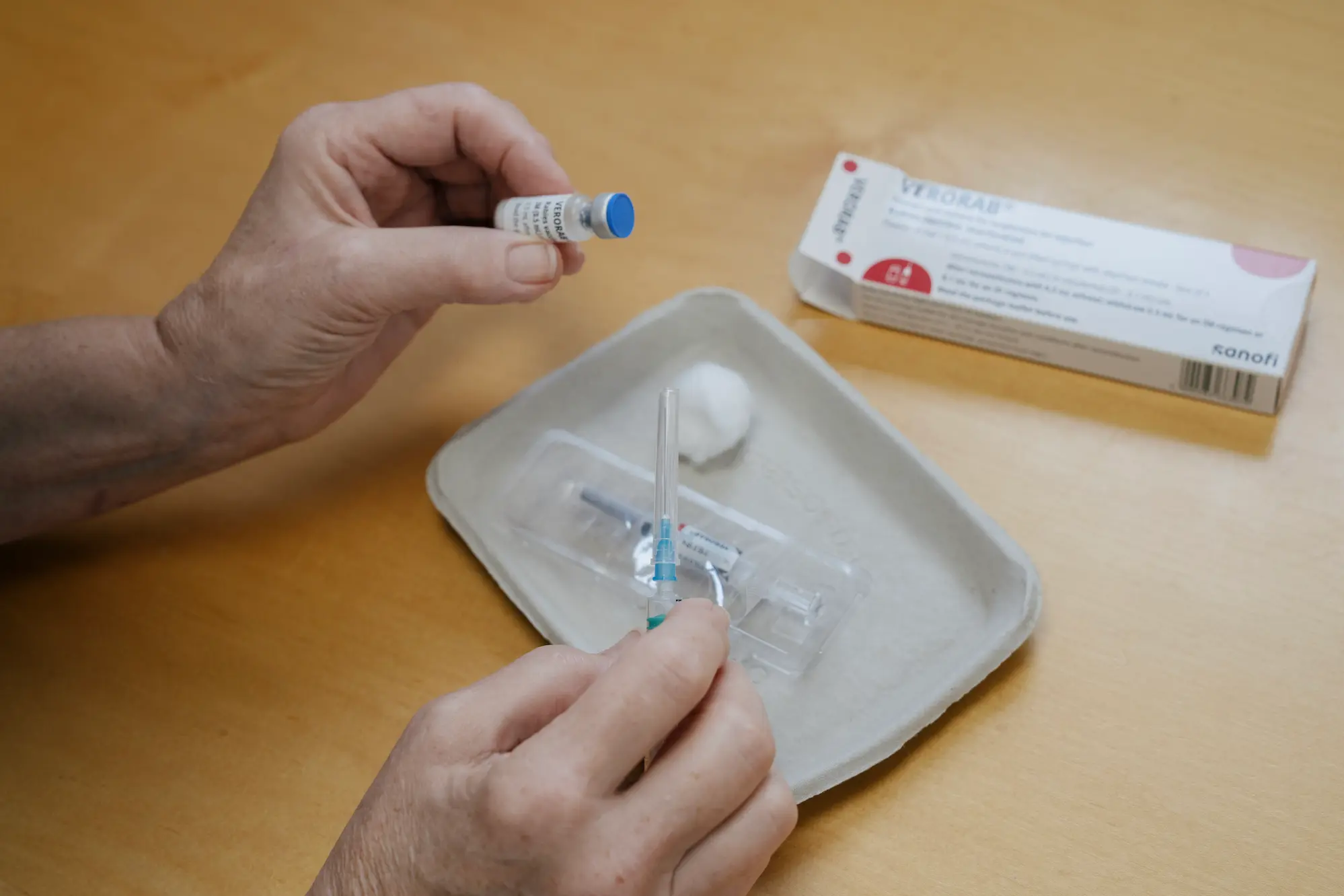
What screening and immunisation is required?
For roles with an infection risk, we check what each person is already immune to and give the vaccinations they need. We work to UKHSA standards and, for healthcare roles, to NHS England's 2026 screening and vaccinations framework.
Our checks cover measles, mumps, rubella and varicella immunity, hepatitis B antibody levels and tuberculosis status. We also give BCG and pertussis vaccines where a role requires them. The tool below shows the common requirements for each role.
Meet the clinical team →Build an indicative screening & immunisation panel
Select a worker type to see the screening and vaccinations that commonly apply. Each item is marked as screening, vaccination or clearance and names the guidance it follows.
Healthcare settings
Other workplaces
Your indicative panel
Select a worker type to add the screening and vaccinations for that role.
We check that tetanus, diphtheria and polio immunisations are up to date.
Green Book, chapter 11Measles immunity in staff who meet patients
A worker who is not immune to measles can pass it to vulnerable and pregnant patients.
MMR status is the first check for every employee who meets patients, whether clinical or non-clinical.
Risks for employers
A worker without evidence of immunity creates risks for patients, staff and your compliance record.
Risk to patients & staff
A worker who is not immune can pass a serious infection to patients or become ill.
Compliance & inspection
CQC inspections and contractual assurance checks include immunity and clearance records. We provide these records for your HR files.
Outbreaks & exclusion
When a case occurs, staff without evidence of immunity may be excluded from work until immunity is confirmed. Screening in advance reduces the risk of exclusion.
In a managed programme, we carry out the screening and immunisations and keep the records.
How a Medwyn immunisation programme works
Review & risk assessment
We review the roles, the setting and any existing records to establish the screening and immunisation each person requires.
Screen & check immunity
We collect vaccination records and take blood tests to check immunity to MMR, hepatitis B and varicella, and we assess TB status.
Vaccinate where needed
We give the vaccinations each person requires, to the Green Book schedule, on site or at our clinic.
Confirm & record
We check antibody levels after a course where required, for example for hepatitis B, and provide records for your files.
Anti-HBs confirms protectionClearance where needed
We carry out EPP health clearance to UKHSA guidance, using identified validated samples.
Boosters & repeat checks
We arrange boosters and repeat checks when they are due and update your records.
Immunisation FAQs
The questions employers ask most about immunisation programmes.
Yes. We check existing immunity to measles, rubella, varicella and hepatitis B before giving any of those vaccines. Staff with evidence of immunity do not need the vaccine.
EPP clearance is a set of blood tests for hepatitis B, hepatitis C and HIV, carried out on identified validated samples before a worker performs exposure-prone procedures. These are procedures where a worker's blood could contaminate a patient's open tissues, in many surgical, midwifery and dental roles. We advise which roles require clearance, including hepatitis B clearance for renal unit staff, and carry out the tests.
Yes, where they have social contact with patients. NHS England's framework lists MMR, varicella (chickenpox) and flu for non-clinical staff such as receptionists, porters, cleaners, catering and estates staff. Hepatitis B is added where the role involves contact with blood or body fluids, or a risk of sharps injuries or bites.
Yes. Our clinicians screen and vaccinate groups of staff at your premises. We also see individuals at our clinic in Dorking.
Yes. We run seasonal flu vaccination programmes at your premises, including for healthcare and social care employers.
Yes. We provide needlestick and sharps injury management for staff exposed to blood or body fluids at work.
No. Travel health is a separate service for staff who travel overseas for work. This page covers infection risks in the workplace.
Related services
Immunisation usually sits alongside these:
Health surveillance
Statutory health monitoring for staff exposed to noise, dust, vibration and other workplace hazards.
Learn more →Pre-employment
Fitness-to-work assessment and health baseline before someone starts.
Learn more →Management referrals
Independent OH advice on an employee's health and fitness for work.
Learn more →This page is general information for employers and is not individual medical or legal advice.
Plan an immunisation programme for your workforce
Tell us about the roles in your workforce and we will advise on the screening and immunisations each one requires. We answer enquiries within 3 working hours.