

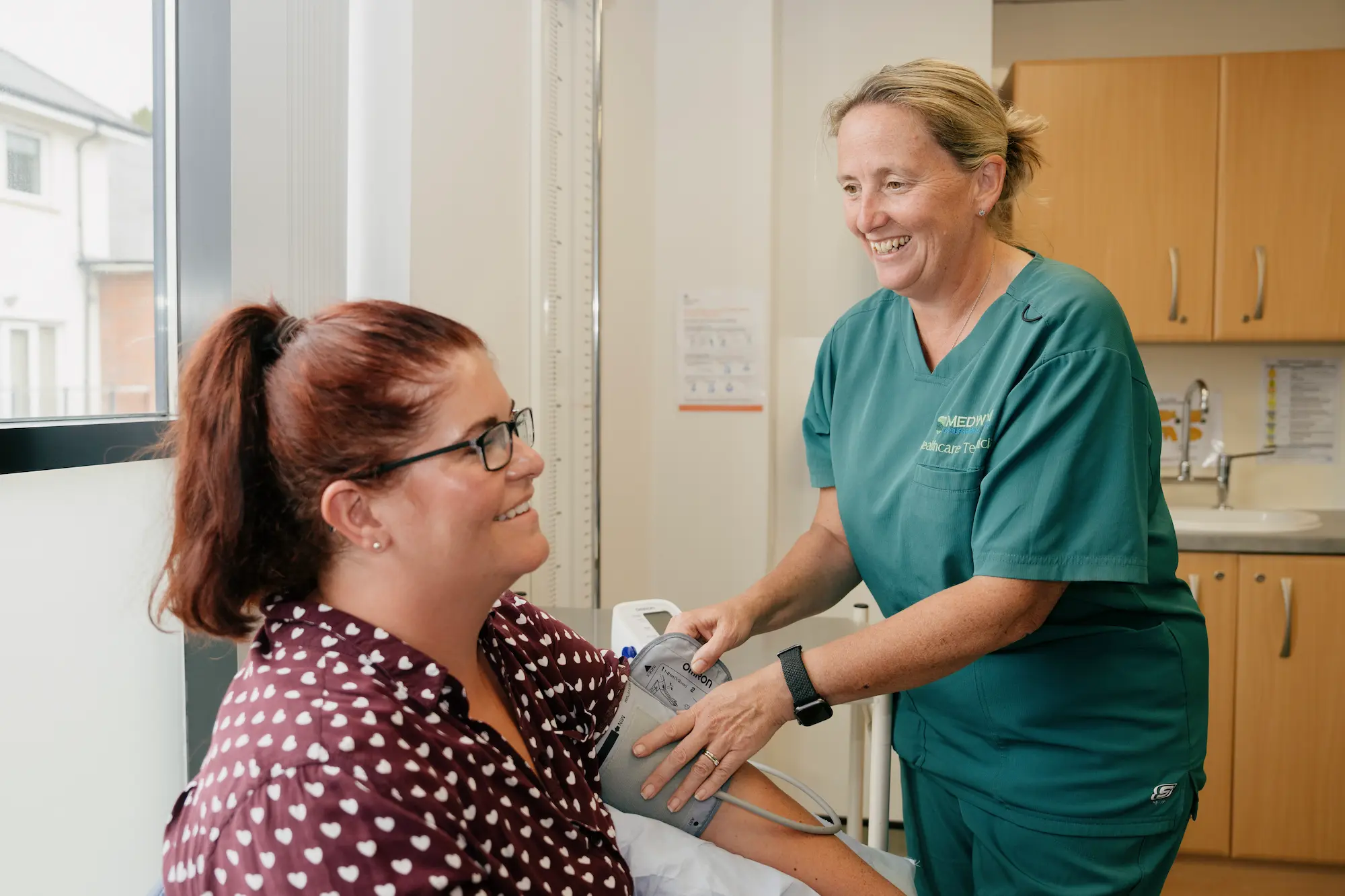
- An occupational health assessment is independent, work-focused advice on how someone's health affects their job and what adjustments would help – not a diagnosis, and not a fit note.
- It rests on the employee's consent: they can decline, and the OH clinician must have their permission before sharing the report with the employer.
- The report gives the employer functional conclusions and recommended adjustments – the clinical detail the employee shares stays confidential.
- Common triggers include long-term or recurring absence, a new condition affecting work, a request for adjustments, and pre-placement or safety-critical roles.
Somewhere in most workplaces, health and work start to overlap. Someone is off sick and no one is sure when they'll be back. A long-standing condition is beginning to affect the day job. A manager wants to help but isn't sure what they're allowed to ask, or what would actually make a difference. An occupational health assessment exists for exactly these moments – and yet many employers are hazy on what one is, what they'll get back, and when to arrange it. Here's a clear guide.
What an occupational health assessment actually is
An occupational health (OH) assessment is an independent, work-focused review of how a person's health affects their ability to do their job – and how their job might affect their health. It's carried out by a qualified OH clinician, usually an occupational health nurse or physician, who considers the person, their role and the demands of the work, then advises the employer on fitness for work and any adjustments that would help.
The distinction that matters most is this: an OH assessment is about function, not diagnosis. As Acas describes it, an OH assessment is more focused than a GP's report on how the employee actually does their job and how the work affects them. The clinician's role is not to treat the person or to put a label on a condition, but to translate a health situation into practical, work-focused advice a manager can act on.
An occupational health assessment answers the question a manager actually has – not "what is wrong with this person?", but "what will help them do their job well?"
How it differs from a fit note or a GP's letter
It's easy to confuse an OH assessment with medical evidence you may already have. A fit note – the Statement of Fitness for Work that a GP or other healthcare professional issues, and which since April 2010 can record that someone "may be fit for work" with suggested adjustments (GOV.UK) – is useful, but brief and general. A GP writes from the patient's side, without knowing the details of the role.
An OH assessment is commissioned by the employer and built around the job. It considers the specific tasks, the environment and the pressures, and produces tailored advice. Acas recommends that employers weigh the recommendations of an OH assessment and any doctor's report together when deciding what to do.
It's also worth naming a common worry. Acas notes that employees often perceive an OH referral as a step towards dismissal rather than support. Handled well – explained openly and framed as help – it is the opposite: a way to keep someone in work, safely.
Good practice
Explain the referral before you make it. Tell the employee why you are referring them, what the assessment will cover and that they will see the report. Framing it as support rather than scrutiny is the single biggest factor in getting a useful outcome.
The main types of assessment
"Occupational health assessment" is an umbrella term. In practice it covers several distinct pieces of work.
A management referral is the most common. An employer refers an existing employee whose health is affecting their work or attendance, and OH advises on fitness, likely timescales and adjustments.
A pre-employment or pre-placement assessment confirms a new recruit is fit for a specific role and flags any adjustments needed before they start. Health questions here follow the job offer rather than precede it – a rule set by section 60 of the Equality Act 2010 that catches many employers out.
Health surveillance is ongoing, often statutory monitoring for people exposed to specific workplace hazards – noise, vibration, respiratory sensitisers, skin irritants – where the law requires you to check for early signs of harm.
Statutory and safety-critical medicals confirm fitness for regulated roles, such as HGV drivers or offshore workers, against a defined standard.
They share the same purpose – matching a person's health to the demands of their work – but differ in trigger, depth and who commissions them.
What actually happens in an assessment
For the employee, an OH assessment is usually a conversation, not an examination. The clinician receives a referral from the employer setting out the reason and the questions to answer, then meets the employee, in person or, increasingly, by video. They take a history, explore how the person is functioning at work and day to day, and discuss what support might help. Contrary to what many people expect, most OH assessments involve little or no physical examination; the value lies in the clinical judgement applied to the working situation.
At the end, the clinician talks the person through the advice they intend to give, before anything is written up for the employer.
Consent and confidentiality: who sees what
This is the part employers most often misunderstand, and it matters. An OH assessment rests on the employee's consent. They do not have to agree to be assessed (Acas), and after the assessment the clinician must have their permission before the report is shared with the employer.
Crucially, the report is not the employee's medical record. It sets out work-focused conclusions – whether they're fit for their role, what adjustments would help, likely timescales – while the clinical detail they disclose stays confidential. The employer receives the advice they need to act on, not a diagnosis.
If the clinician needs further information from the employee's own GP or specialist, that requires separate written consent, and the employee has rights under the Access to Medical Reports Act 1988, including the right to see that report first. In most OH services the employee can also see the OH report itself before it goes to their employer.
What you receive, and what to do with it
A good OH report is short, clear and practical. It typically confirms whether the person is fit for their current role, with or without adjustments; gives a realistic view of timescales and prognosis in work terms; recommends specific, prioritised adjustments; and, where relevant, flags whether the Equality Act 2010 may apply.
That last point deserves care. OH can advise that a condition is likely to meet the Act's definition of disability – a physical or mental impairment with a substantial and long-term (12 months or more) adverse effect on normal day-to-day activities (Equality and Human Rights Commission) – but whether the Act applies in a given case is ultimately a matter for an employment tribunal, not for OH. Where the duty does arise, the employer is under a positive, proactive duty to make reasonable adjustments (Equality Act 2010, sections 20 and 21). OH advice makes that duty far easier to meet, but the decision, and the legal responsibility, remain the employer's.
The report is advice, not instruction. You weigh it alongside any fit note or GP letter, discuss it with the employee, and agree a course of action together.
When to arrange an assessment
There's no single trigger, but the common ones are: absence that is becoming long-term or keeps recurring; a new or worsening health condition that is affecting someone's work; a request for adjustments you're not sure how to meet; a planned return after significant illness or injury; and pre-placement or safety-critical roles where fitness has to be confirmed. As a rule, the earlier OH is involved – ideally as part of everyday good management rather than only when a problem escalates – the more useful the advice tends to be (Acas).
In short
Used well, an occupational health assessment turns an uncertain, sometimes tense situation into a clear set of next steps – better for the employee, and safer for the employer. If you're weighing up a referral, or want to talk through whether an assessment would help, Medwyn's occupational health team is happy to advise.
This article is general guidance for employers and is not individual medical or legal advice. If you are unsure how it applies to your organisation, contact our team.